
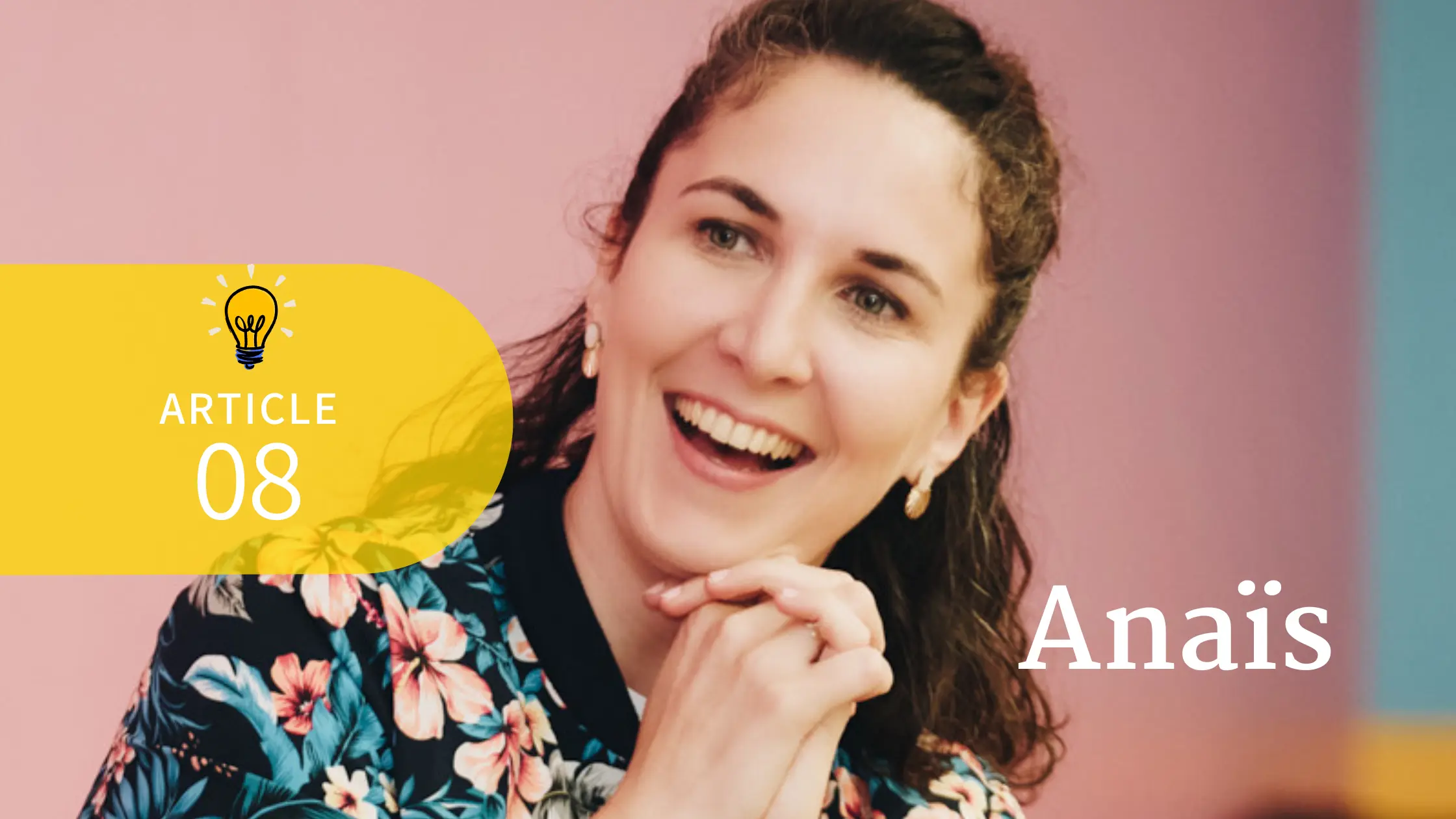
Anaïs: supporting women navigating career transitions with clarity, confidence and ease.
Summary:
Career changes can hit you at 23, 36, or 45. And what do we do when we don’t feel aligned with our values at work? Where do we start when we don’t fit in the old version of ourselves anymore? When we outgrow our decisions. What do we search for when we relocate? How do we navigate career transition, burnout, imposter syndrome?
If you have ever felt stuck, unfulfilled or disaligned, if you have been looking for career happiness, if you no longer fit the old version of you, or feel you need to start again from scratch (Spoiler: you don’t), this conversation with Anaïs Comot, career coach and founder of HerCode, is for you.
1. Looking back, what moment or realisation made you decide to do the work you do now?
It wasn’t one single moment, but a series of them that culminated in a very clear realisation.
The most significant was finding myself completely lost career-wise at just 23. I had followed what felt like the “right” path on paper – studying to become an International Buyer – and I was carrying a €30k student loan that made changing direction feel both irresponsible and terrifying. Yet deep down, I knew this path neither played to my strengths nor would make me happy.
It took me three years of active questioning, detours and trial-and-error to admit that nothing was “wrong” with me – I had simply outgrown the decision I’d made at 18. I figured all of this out alone, and it was incredibly isolating.
That experience is at the heart of my work today. I don’t want women to feel like they’ve failed, made a huge mistake, or need to “start again from scratch” just because their career is evolving. Careers are made of detours, seasons and adventures – and helping my clients see that their path still makes sense, even when it looks messy, is something I deeply believe in.
2. What does “career happiness” mean to you, and is that even achievable?
I talk about career happiness proudly because it’s not a fixed destination – it’s deeply personal and constantly evolving.
To me, career happiness means that your work aligns with what matters to you right now. Sometimes your career is the priority; sometimes it supports other parts of your life that matter more. Both are valid.
What I love about this concept is that there is no universal checklist or “ideal” career to aim for. Career happiness shifts as we do. When I started my business, it meant earning a living doing work I loved. When I became a parent, it became about flexibility and protecting my energy. I’m sure it will continue to evolve with future seasons of life.
So yes – it’s achievable. But not as a permanent state. It’s something you revisit, redefine and realign with, again and again.
3. What are the most common challenges you see women facing when building careers abroad?
The challenges often depend on where they are in their relocation journey.
For women planning a move, a big challenge is not knowing the market they’re entering. CV formats, hiring practices, networking norms and even interview expectations can vary hugely from one country to another. Many approach a job search abroad exactly as they would at home – and that’s where frustration starts.
I always encourage research beyond job listings: understanding workplace culture, local expectations and how hiring decisions are really made. That knowledge alone can completely change how confident and effective someone feels in their search.
For women who’ve lived abroad for several years, a different challenge emerges – realising when their life abroad no longer fits who they’ve become. The person you were when you moved isn’t the same person five or ten years later. Priorities shift, relationships evolve, and sometimes the career that once justified the move starts feeling misaligned.
What’s tricky is that this realisation often comes with guilt or confusion: “But this is what I wanted.” Helping women recognise that it’s okay to want something different – and that change doesn’t invalidate past choices – is a big part of my work.
4. Why was it important for you to make your work accessible and community-led?
I experienced my biggest career crisis very early, at 23, and I know how inaccessible career support can feel – financially, emotionally, and even culturally.
That’s why accessibility has always mattered to me. I wanted women, regardless of age, background or salary, to have access to support, resources and conversations that help them move forward with clarity.
This is what led me to create HerCircle, a community-led space supporting women through career transitions with clarity, confidence and ease. I host a free event every month so that anyone can connect, learn and feel less alone in their career questions. Community creates perspective – and that’s often the missing piece when someone feels stuck. Calendar of events this way.
5. What helps the women you work with rebuild trust in themselves during uncertainty?
Periods of uncertainty are vulnerable by nature – and our brains are wired to treat the unknown as a threat.
When burnout, imposter syndrome or confidence dips appear, the work isn’t about “fixing” someone. It’s about grounding. I help my clients reconnect with what remains solid, regardless of change: their skills, values, strengths and past accomplishments.
When someone can clearly see what they already carry with them – what they’ve navigated before, what they’re good at, what matters to them – uncertainty becomes less overwhelming. It turns from a threat into a transition. Trust rebuilds when you remember that you are not starting from zero.
6. What is one thing you do that makes your work “less boring”?
I constantly follow my curiosity – and my community’s. I ask myself two questions regularly: What does my community need to learn about? and What do I want to learn about right now? That keeps my work dynamic and human.
I invite guest experts on topics that complement careers – from wellbeing and finances to mindset, cycle awareness and personal branding. Every quarter, I also host spotlight sessions where HerCircle members share real-life experiences around themes like relocation or motherhood.
Hearing real stories – not just expert advice – keeps the work alive, relevant and deeply engaging!
7. What is the best piece of advice you’ve ever received?
“Don’t spend too much time in your head trying to build the perfect plan. Nothing beats experimenting. The sooner you fail, the quicker you learn and adjust.” I heard this during a masterclass on embracing failure over five years ago, and it stayed with me. It’s a reminder that clarity often comes after action – not before.
What we’ve learned
- Career happiness exists and evolves. What mattered five years ago might not matter now. Both versions are valid.
- You’re not starting from zero. Your skills, values, and what you’ve already navigated come with you.
- Detours aren’t failures. Careers are made of seasons and adventures. Messy doesn’t mean wrong.
- Community creates clarity. Sometimes a different perspective is what breaks the feeling of being stuck.
- Wanting something different doesn’t invalidate past choices. You can change direction without calling it a mistake.
Anaïs proves that you don’t need to have it all figured out before you start. Clarity comes after action, not before. A powerful reminder for everyone: that we can start today, even if we don’t have it all figured out.
Another interview is already in the making. Stay tuned.