
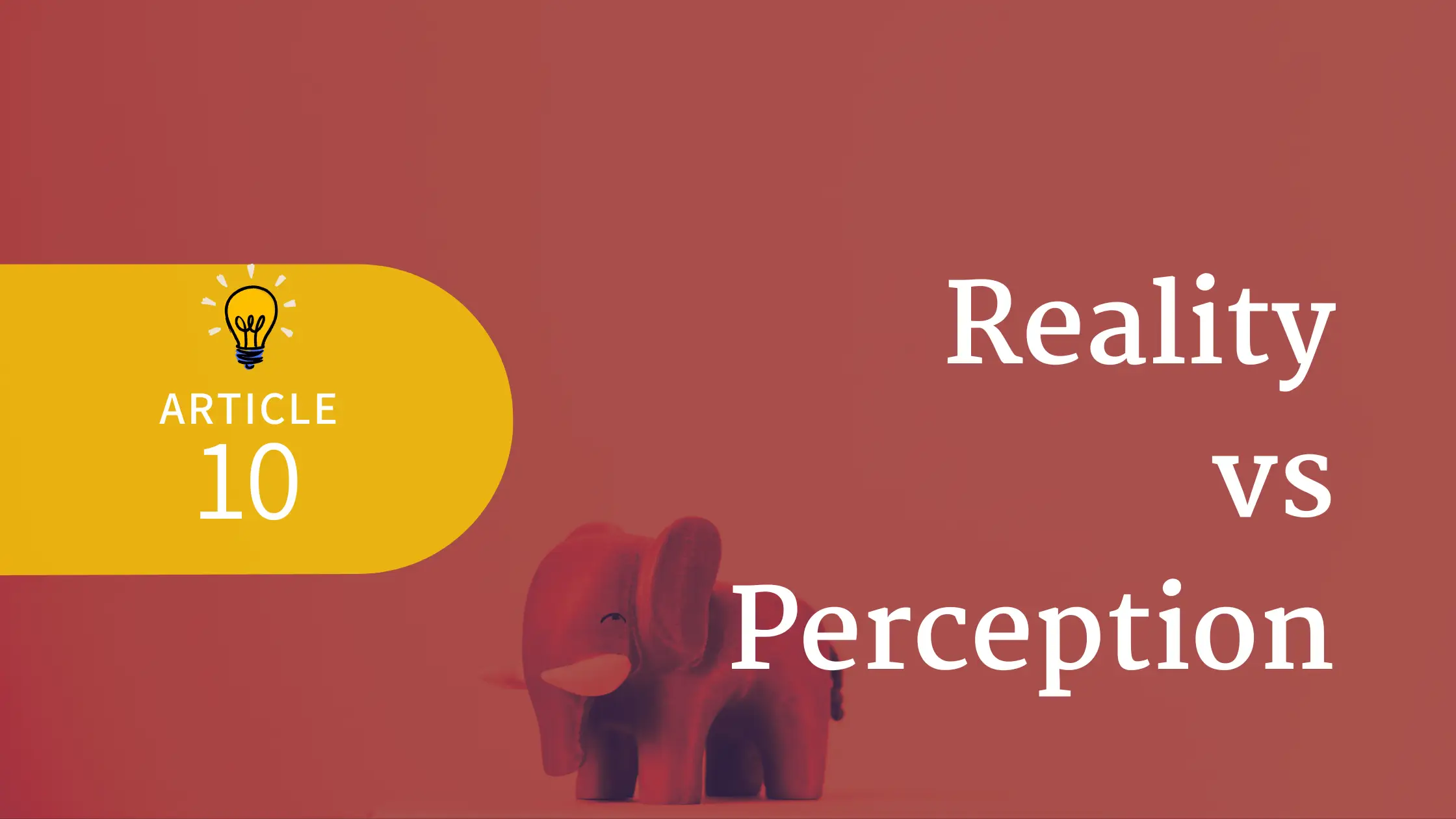
Perception vs reality, the elephant and the rider, pricing psychology.
Summary:
Last year I completed the MAD//Masters programme on behavioural science and marketing with Rory Sutherland. I have decided to write three articles about the key topics (for me) that every marketer and founder should use in their marketing strategy.
This is Part 1 and it covers:
Perception vs reality, the elephant and the rider, pricing psychology. The foundational mindset shift.
Reality vs Perception
The UK Post Office discovered that 97% of first-class mail arrived the next day. Public perception? Between 30% and 80%.
The gap between those two numbers is enormous, and it had nothing to do with performance.
Instead of spending millions trying to close the remaining 3% (which almost nobody would notice), they told people: “We’re better than Germany.” Perception improved overnight, at almost zero cost.
This isn’t a marketing trick.
We judge things in comparison, not in isolation. Against a reference point, what we expected, or what we’ve been primed to think.
Marketing’s job is to make things better so that people experience the better.
The problem was the not knowing
Uber didn’t fix the taxi problem by making cars arrive faster. They put a map on your phone.
People were complaining about the time, but the real issue was uncertainty. Once you can see the car moving toward you, the anxiety disappears. You relax. You can have a pint while waiting.
What changed? Not the duration, but the experience of the duration.
Most of the time, brands are spending money solving the wrong thing.
Your customer’s unconscious decisions
Jonathan Haidt’s rider and elephant model is a description of how the brain functions.
The rider (the conscious mind) thinks it’s in charge. It isn’t. It writes the press release for decisions the elephant (the unconscious) has already made.
The elephant is stronger, faster, and runs on heuristics. Mental shortcuts that are good enough to avoid catastrophe, even when they’re not perfectly logical.
We are, as Kahneman put it, cognitive misers. Thinking is effortful. We avoid it wherever we can.
So when you build a marketing argument that requires careful deliberation, you’ve already lost most people.
When you design something that feels right without requiring analysis, that’s speaking to the elephant.
Why your pricing logic might be working against you
Two clock radios. Radio A costs £45. Radio B costs £25 and has more features.
Logical choice? Radio B.
What actually happens? People often buy neither.
Because the elephant doesn’t reason like an economist. It thinks: if this is better, why is it cheaper? Something doesn’t add up. And when something doesn’t add up, the safest thing to do is nothing.
Nespresso succeeded because they changed what the product was being compared to. Not instant coffee. Starbucks. Suddenly 50p isn’t expensive, it’s a bargain.
Same price. Different comparison point. Completely different decision.
Price communicates cost and meaning. It tells the brain whether to trust the product or to be suspicious of it.
If you want people to believe your product is better, sometimes you need to charge more, because the brain needs the signal.
What we’ve learned
People respond to their perception of reality: what they expected, what they were comparing you to, what uncertainty was doing to them before you even spoke.
Before any conversation about campaigns, content, or creative, ask: is this a reality problem or a perception problem?
Because those require completely different solutions. And getting that wrong is how marketing ends up doing a lot of work for very little result.
Part 2 is about what you do once you accept this. The data, the creative tools, and the frameworks that actually work.